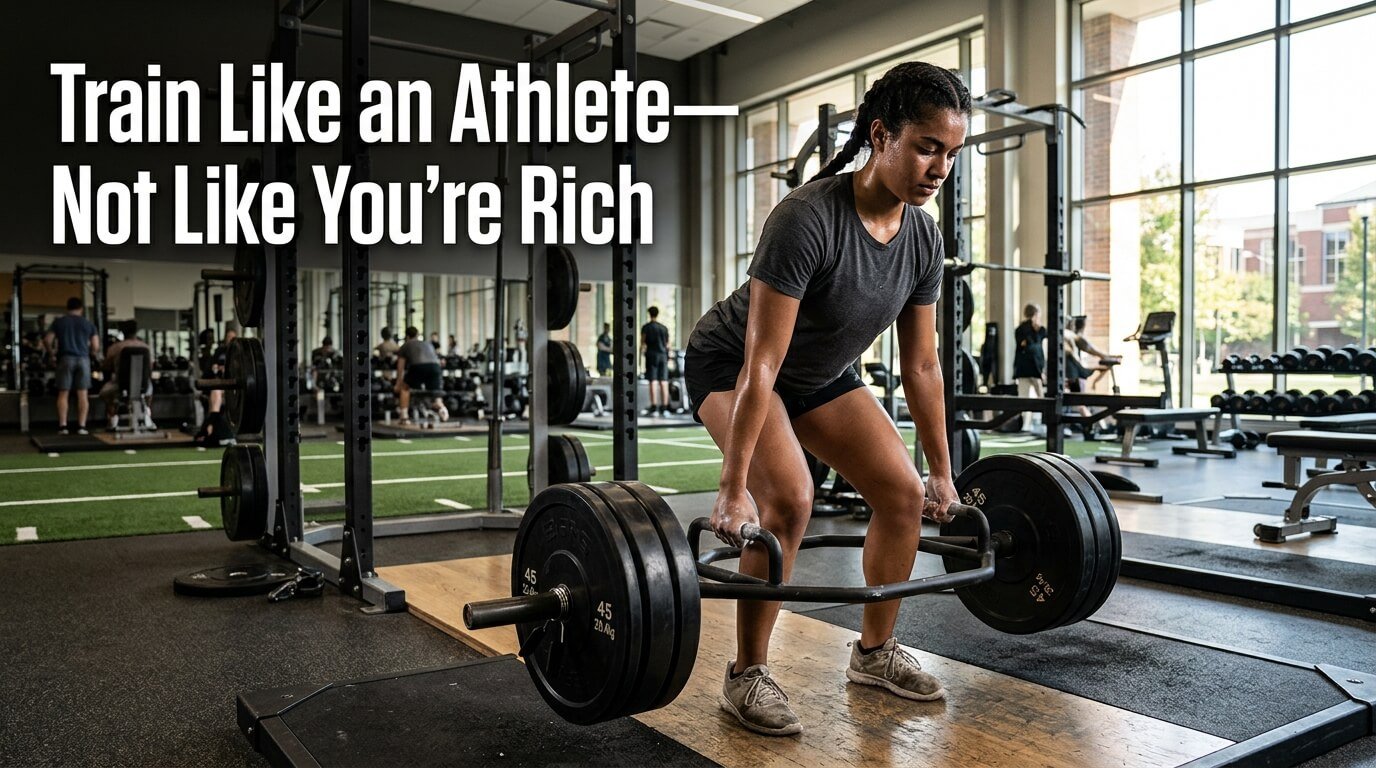
Finding affordable performance fitness programs for college student athletes feels almost impossible when you’re living off ramen and splitting rent four ways. I remember staring at $200/month training programs my sophomore year, wondering if I was supposed to sell a kidney to get faster. The truth? You don’t need to drain your bank account to train like a serious athlete. You just need to know where to look and what actually delivers results without the premium price tag.
Why Most College Athletes Overspend on Training
The fitness industry loves targeting ambitious athletes who feel pressure to perform. Premium coaching apps, boutique training facilities, and personalized programming all come with price tags that assume you have a full-time salary. But here’s the thing: most college athletes don’t need a $300/month custom plan.
What you actually need is structured progressive overload, sport-specific conditioning, and recovery protocols. Those fundamentals don’t cost much when you find the right resources. I wasted nearly $1,500 my first two years on programs that gave me the same results I later got for under $30 a month. The difference wasn’t quality. It was marketing.
A lot of programs charge for the branding and the community access, not necessarily for superior programming. Once I realized that, everything changed.
Affordable Performance Fitness Programs for College Student Athletes That Actually Deliver
Not every budget program is worth your time. Some are cheap because they’re generic garbage. I’ve tested enough of them to know the difference. Here are the ones that genuinely work for college athletes on a tight budget.
GZCL Method (Free)
Cody Lefever built this strength framework and released it for free online. It uses a tiered approach: heavy compound lifts at the top, moderate accessory work in the middle, and high-rep isolation at the bottom. I ran the GZCL Jacked & Tan 2.0 template during my junior track season and hit PRs in squat and deadlift while improving my sprint times.
You can find every template on Reddit’s r/gzcl or the GZCL blog. Zero cost. You just need a basic gym, which most colleges provide through student fees anyway.
Boostcamp App (Free)
This app blew my mind when I found it. Boostcamp offers dozens of proven strength and hypertrophy programs from real coaches, all completely free. Programs from coaches like Jeff Nippard and Greg Nuckols live on the platform with full progression tracking built in.
The interface logs your sets, calculates your working weights, and tracks rest periods. I used it for an entire summer and never felt like I was missing out compared to paid apps. The only catch is limited customization, but for most college athletes following a structured plan, that’s actually a benefit.
Juggernaut Training Systems AI ($24.99/month)
If you can swing $25 a month, JuggernautAI is probably the best value in performance training right now. The app adjusts your programming based on how you rate each session’s difficulty, fatigue level, and technique quality. It adapts weekly.
I split the cost with my training partner since you can technically share login credentials (don’t tell them I said that). For sport-specific athletes, the app lets you input your practice schedule so it programs around your training load. That feature alone is worth the price, because most generic programs don’t account for the fact that you’re also sprinting, jumping, or swimming six days a week.
NSCA Exercise Library and Free Resources
The National Strength and Conditioning Association offers a massive free exercise database and regularly publishes research-backed training protocols. Their student membership costs around $70/year and gives you access to journals, webinars, and certification discounts.
For college athletes studying kinesiology or exercise science, this doubles as academic material. I used NSCA resources to build my own off-season programs during my senior year, and honestly, the knowledge I gained was more valuable than any app subscription.
How to Use Your Campus Gym Like a Pro Facility
Your tuition already pays for that campus rec center. Most college athletes underestimate what’s available to them. I spent two years paying for an off-campus gym membership before I realized my university gym had bumper plates, platforms, cable machines, and even a turf area.
Walk into your campus gym during off-peak hours, typically between 1 PM and 4 PM on weekdays. You’ll have full access to squat racks, benches, and pulling stations without waiting. Some universities also offer free fitness assessments or personal training consultations through their wellness programs. I got a free movement screen from a grad student trainer that identified a hip mobility issue I’d been ignoring for months.
Check if your school’s athletic department shares any training resources with general students. Some schools post their strength and conditioning templates publicly or offer open sessions.
Building Your Own Program Without Paying a Coach
Creating your own affordable performance fitness program sounds intimidating, but it follows a simple formula once you understand the basics.
Pick 2 to 3 compound lifts per session. Structure your week around push, pull, and lower body patterns. Add sport-specific conditioning 2 to 3 times per week. Track everything in a free app like Strong or a plain spreadsheet.
Here’s what a basic week looked like for me during soccer season:
- Monday: Back squat, Romanian deadlift, Nordic hamstring curls
- Tuesday: Sport practice plus tempo runs
- Wednesday: Bench press, pull-ups, dumbbell rows
- Thursday: Sport practice plus agility work
- Friday: Trap bar deadlift, split squats, core circuit
- Saturday: Game day or scrimmage
- Sunday: Recovery walk, foam rolling, stretching
That structure cost me exactly nothing beyond my campus gym access. I progressed every single week using simple linear periodization.
Recovery Tools That Won’t Break the Bank
Training hard on a budget means nothing if you can’t recover. Expensive cryotherapy sessions and $120 massage guns aren’t the only options.
A basic foam roller costs about $15 on Amazon and handles 90% of your soft tissue work. I bought a lacrosse ball for $3 and used it on my hip flexors, glutes, and upper back after every session. Those two tools carried me through four years of competitive athletics.
Sleep is free and more powerful than any supplement. I tracked my sleep with a free app called Sleep Cycle and realized I was consistently getting under six hours. When I forced myself to hit seven and a half hours, my squat numbers jumped within three weeks. No new program needed.
Cold water immersion doesn’t require a $5,000 tub. Fill your bathtub with cold water and a bag of ice from the gas station. Total cost: about $2 per session.
Free YouTube Channels Worth Following
Some of the best coaching content lives on YouTube, and it costs absolutely nothing. A few channels consistently deliver programming advice specifically useful for college-level athletes.
Renaissance Periodization breaks down training volume, intensity, and recovery science in a way that’s both nerdy and practical. Squat University focuses on movement quality and injury prevention, which saved my knees during heavy squat cycles. Garage Strength tailors content specifically toward competitive athletes across multiple sports.
I built an entire off-season training block using free content from these three channels combined with a Google Sheets template. The results matched anything I got from paid programs.
Nutrition on a College Budget
No affordable performance fitness program works without adequate nutrition, and eating well in college is its own challenge.
Buy in bulk from Costco or Aldi. Rice, oats, eggs, frozen chicken thighs, bananas, and peanut butter form the foundation of a performance diet that costs roughly $50 to $60 per week. I meal prepped every Sunday using five containers and repeated the same meals Monday through Friday. Boring? Sure. Effective? Absolutely.
Protein powder doesn’t need to be fancy. Optimum Nutrition Gold Standard or MyProtein Impact Whey both run under $30 for a month’s supply if you buy during sales. One scoop post-workout plus one scoop before bed gave me roughly 50 extra grams of protein daily for less than a dollar.
Skip the pre-workout supplements. Black coffee costs pennies and delivers the same caffeine boost without the proprietary blends and artificial ingredients.

When It’s Actually Worth Paying More
I’m not going to pretend every athlete can thrive on free resources alone. There are situations where spending more makes sense.
If you’re recovering from an injury, a qualified strength coach or physical therapist is worth every dollar. If you’re preparing for a combine, tryout, or professional opportunity, personalized coaching can give you an edge that generic programs can’t. If you’ve been training for several years and your progress has completely stalled, a coach’s eye on your technique and programming might be the missing piece.
The key is knowing when you’ve outgrown free resources versus when you’re just bored with them. Boredom isn’t a reason to spend more money. A genuine performance plateau might be.
FAQs
Are free fitness programs effective enough for competitive college athletes?
Yes, if you pick the right ones. Programs like GZCL and those on Boostcamp are built by experienced coaches using proven training principles. The programming science is identical to what you’d find in paid options. The main difference is you won’t get individualized feedback, but most college athletes respond well to structured general programs anyway.
How much should a college student athlete realistically budget for fitness each month?
You can train effectively for $0 to $30 per month using campus gym access and free or low-cost apps. Add another $50 to $60 for solid nutrition basics. Total monthly investment of around $60 to $90 covers training, recovery tools, and food without cutting into your textbook or rent money.
Can I find affordable performance fitness programs for college student athletes that include sport-specific training?
JuggernautAI is one of the best options for sport-specific programming on a budget. It accounts for your practice schedule and sport demands when building your strength program. Free options like building your own template using NSCA guidelines also let you customize around your sport’s physical demands.
Should I follow a bodybuilding program or a strength program as a college athlete?
Strength programs with athletic conditioning generally serve college athletes better than pure bodybuilding splits. Bodybuilding programs prioritize muscle isolation and aesthetics, while strength programs build the compound movement patterns and power output that transfer to sport performance. You can still look good following a strength program, trust me.
How do I know if a cheap online fitness program is actually legit?
Look for programs backed by coaches with real credentials, like CSCS, USAW, or demonstrated coaching experience with athletes. Check reviews from actual users on Reddit or training forums, not just testimonials on the sales page. If a program promises insane results in two weeks or uses mostly stock photos, walk away.
Conclusion
Training like a serious athlete in college doesn’t require serious money. The resources exist, and most of them are either free or cost less than a weekly coffee habit. What matters way more than your budget is your consistency, your effort, and your willingness to follow a structured plan instead of winging it every session. What’s the best budget training hack you’ve found as a college athlete?