Finding foolproof performance fitness strategies for desk job professionals felt impossible when I was logging 50-hour weeks glued to a monitor. My back screamed by 2 PM. My energy crashed after lunch like clockwork. I tried gym memberships, YouTube workouts, standing desks, all of it. Most lasted two weeks before my schedule swallowed them whole. But after three years of trial and error, I finally built a system that fits around a demanding desk job, not against it.
Why Traditional Fitness Advice Fails Desk Workers
Most fitness programs assume you have flexible time, energy after work, and a body that hasn’t been folded into a chair for eight hours. That’s not reality for someone answering Slack messages until 6 PM. The standard “hit the gym five days a week” advice collapses fast when your commute eats an hour each way and your brain is fried by evening.
I used to beat myself up about skipping workouts after work. Then I realized the problem wasn’t discipline. The problem was that I kept trying to follow plans designed for people with completely different schedules and physical starting points. Desk workers deal with specific issues: tight hip flexors, weak glutes, rounded shoulders, chronic sitting fatigue. Generic programs ignore all of that.
The moment I stopped following cookie-cutter plans and started building around my actual day, everything changed. The strategies below came from that shift.
Start With a 10-Minute Morning Activation Routine
You don’t need a full workout before your commute. You need to wake your body up after sleeping and before sitting for hours. I spend exactly 10 minutes every morning on what I call activation, not exercise.
Here’s what my routine looks like: glute bridges (2 sets of 15), dead hangs from a pull-up bar I mounted in my hallway (30 seconds twice), cat-cow stretches (1 minute), and band pull-aparts (2 sets of 15). That’s it. The whole thing takes less time than brewing coffee, and I’m not even slightly winded afterward.
The point isn’t cardio or strength. It’s telling my muscles they exist before I park them in a chair. Since I started doing this consistently, my lower back pain dropped by about 80%, and I feel noticeably more alert during morning meetings. A resistance band and a doorframe pull-up bar from Amazon cost me under $40 total. That’s the entire investment.
Build Movement Snacks Into Your Workday
This single concept changed my relationship with fitness more than any gym membership ever did. Movement snacks are tiny bursts of activity scattered throughout your workday, usually 2 to 5 minutes each.
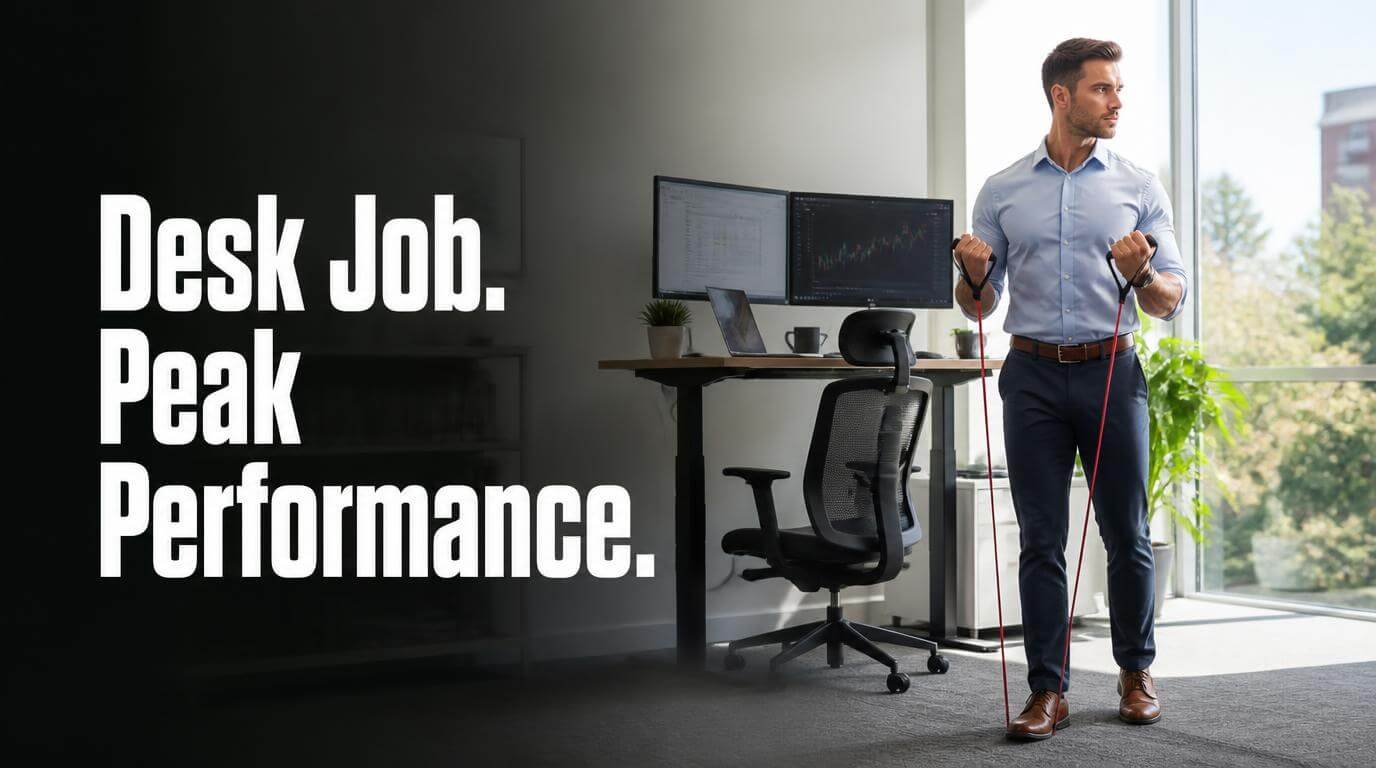
Every 60 to 90 minutes, I step away from my desk and do something physical. Sometimes it’s 20 bodyweight squats in my office. Sometimes it’s a lap around the building. Sometimes I knock out a set of push-ups or just stretch my hip flexors against the wall for two minutes. I use a simple recurring timer on my phone set to 75-minute intervals.
The research backs this up. A 2023 study published in the British Journal of Sports Medicine found that short, frequent movement breaks improved metabolic health markers significantly compared to a single longer workout. But honestly, I didn’t need a study to tell me. I could feel the difference within a week. My afternoon energy stayed level instead of cratering, and I stopped craving sugar at 3 PM.
The key is making these so small and easy that you never skip them. If 20 squats feels like too much on a busy day, do 5. Five squats still beat zero squats every single time.

Pick a Training Schedule That Respects Your Energy
Here’s where most desk workers crash and burn. They commit to training five or six days a week because some fitness influencer said so, then they quit in three weeks because they’re exhausted and sore.
I train three days a week. That’s it. Monday, Wednesday, Saturday. I’ve done this consistently for over two years now, which is longer than any previous “ambitious” program lasted. Three days gives me enough recovery time, keeps my joints happy, and doesn’t compete with work deadlines.
My split is simple: two full-body strength sessions during the week (about 40 minutes each) and one longer active session on Saturday, usually a hike, a bike ride, or a pickup basketball game. I follow a basic progressive overload program through an app called GZCLP, which auto-adjusts my weights. No thinking required.
If you’re coming from zero training, start with two days a week. Seriously. Two quality sessions beat five half-hearted ones. You can always add a day later when it feels natural.
Fix Your Desk Posture Before It Fixes You
No amount of training compensates for 8 hours of terrible posture daily. I learned this the expensive way, through a $2,000 series of physical therapy sessions for a neck issue that stemmed entirely from how I sat at my computer.
Three changes made the biggest difference for me. First, I raised my monitor so the top of the screen sits at eye level. I used a simple monitor arm from ErgoTron, though a stack of books works fine too. Second, I started sitting with my feet flat on the floor and my knees at roughly 90 degrees, which meant actually adjusting my chair height instead of ignoring it. Third, I set my keyboard and mouse close enough that my elbows stay near my sides rather than reaching forward.
These aren’t fitness strategies in the traditional sense, but they directly affect performance. Bad posture creates muscle imbalances that make every workout harder and every recovery slower. Think of posture correction as the foundation that everything else sits on.

Foolproof Performance Fitness Strategies for Desk Job Professionals Must Include Nutrition Timing
Training and movement matter, but what and when you eat during a desk day matters just as much. I used to eat a huge lunch around noon, then wonder why I felt like a zombie from 1 to 3 PM. The fix was embarrassingly simple.
Now I eat a moderate lunch focused on protein and vegetables, usually grilled chicken with a big salad or a grain bowl from Chipotle with double protein and no rice. I save my carb-heavier meal for dinner, after my workout or at least after my workday ends. This keeps my blood sugar stable through the afternoon and gives me energy when I actually need it for training.
I also keep protein-rich snacks at my desk: beef jerky, Greek yogurt, mixed nuts, protein bars from Rxbar or Barebells. Hitting around 0.7 to 1 gram of protein per pound of bodyweight daily made a visible difference in my recovery and body composition within about six weeks. I track loosely using MyFitnessPal, nothing obsessive, just enough awareness to stay in the right ballpark.
Skipping meals to “save calories” is a trap. It tanks your energy and leads to overeating at night. Consistent, balanced meals throughout the day keep you functional and fueled.
Prioritize Sleep Like It’s Part of Your Program
I used to treat sleep as the thing that happened after I finished everything else. Turns out, sleep IS the program. Without 7 to 8 hours of quality sleep, your workouts suffer, your recovery stalls, your focus at work drops, and your willpower around food evaporates.
Two things massively improved my sleep quality. First, I set a hard “screens off” time at 9:30 PM. No phone, no laptop, no TV after that. I read a physical book or just talk with my wife. It felt weird for the first week, then it felt amazing. Second, I keep my bedroom cold, around 66 to 68 degrees, and completely dark. I bought blackout curtains from Amazon for $25, and they were genuinely one of the best purchases I’ve made for my health.
If you’re sleeping 5 to 6 hours and wondering why your fitness isn’t progressing, that’s your answer. No supplement or workout hack replaces sleep. Period.
Use Walking as Your Secret Weapon
Walking doesn’t get enough credit. It burns calories without spiking cortisol, it clears your head, it doesn’t require recovery time, and you can do it in work clothes. I aim for 8,000 to 10,000 steps daily, and most of those come from intentional choices rather than random movement.
I take all my one-on-one calls while walking outside. I park at the far end of the lot. I walk to a coffee shop six blocks away instead of using the office machine. After dinner, my wife and I do a 20-minute loop around our neighborhood. These tiny decisions stack up fast.
A cheap fitness tracker like the Xiaomi Mi Band or even just your phone’s built-in step counter makes this easy to monitor. I noticed that on days I hit my step goal, I sleep better, eat better, and feel significantly less stressed. The correlation is so consistent that I now treat my daily walk goal with the same importance as my actual training sessions.

Track Progress With Simple Metrics
You don’t need a complicated spreadsheet. I track exactly four things: training days completed per week, daily step count, body weight (weekly average, not daily), and how I feel on a scale of 1 to 5 each morning.
That last one sounds unscientific, but it’s the most useful metric I have. If my “feel” score drops below 3 for several days in a row, something needs adjusting, usually sleep, stress, or food quality. The number on the scale fluctuates and doesn’t tell the whole story. How you actually feel in your body does.
I use a simple Google Sheet for this. Takes 30 seconds each morning. Over months, patterns emerge that no single workout or meal plan could reveal. Maybe your energy always tanks during quarterly reporting, which means you should dial back training intensity during those weeks instead of pushing through and burning out.
FAQs
What are the best foolproof performance fitness strategies for desk job professionals just starting out?
Start with two training sessions per week and daily movement snacks at your desk. Fix your posture setup, aim for 7 or more hours of sleep, and walk more intentionally. Don’t overhaul everything at once. Add one habit at a time and let it stick for two weeks before adding the next. Consistency with basics beats a complicated plan you abandon.
How often should I work out if I sit at a desk all day?
Three days a week is the sweet spot for most desk workers. It gives you enough stimulus to build strength and improve body composition without competing with work energy demands or burning you out. If three feels like too much initially, start with two. The goal is a frequency you can maintain for months, not just weeks.
Can I get fit without going to a gym?
Absolutely. I trained at home for six months using a pull-up bar, resistance bands, and a pair of adjustable dumbbells. Programs like the Reddit Bodyweight Fitness routine require zero equipment. A gym is convenient if you want heavier weights or machines, but it’s not required. Plenty of desk workers build impressive fitness with home setups and outdoor activity.
How do I stay consistent when work gets overwhelming?
Lower the bar instead of clearing it from your schedule entirely. On brutal weeks, I cut my workouts to 20 minutes and simplify meals to pre-made options. I still walk, still do my morning activation, still sleep on time. The habit of doing something, even a reduced version, protects your long-term consistency far better than an all-or-nothing approach.
Does standing at a standing desk count as exercise?
Not really. Standing burns slightly more calories than sitting and can reduce some postural issues, but it doesn’t replace actual movement or training. I use a sit-stand desk and alternate positions every 30 to 45 minutes. It helps with comfort and alertness, but I still need my walks, movement snacks, and training sessions for actual fitness progress.
Conclusion
Building fitness around a desk job isn’t about finding more time or more motivation. It’s about building smarter systems that work with your schedule instead of pretending your schedule doesn’t exist. Every strategy here came from my own years of getting it wrong first, and I genuinely wish someone had handed me this list when I started. What’s the one change you’re going to try first?