If you’ve been searching for performance fitness strategies for people who train alone without partners, chances are you already know the silent struggle. No spotter. No hype crew. No one to call you out when you skip that last set. Training solo can feel like shouting into a void some days, but honestly, it’s also where the most self-aware athletes are built. I’ve lifted, run, and programmed my own training alone for over six years now, and I wouldn’t trade the lessons it taught me.
1. Build a Program That Doesn’t Require a Spotter
The fastest way to stall your progress as a solo trainer is to design workouts that actually need another person. I learned this the hard way when I got pinned under a bench press at 5:30 a.m. in my garage. Not my proudest moment.
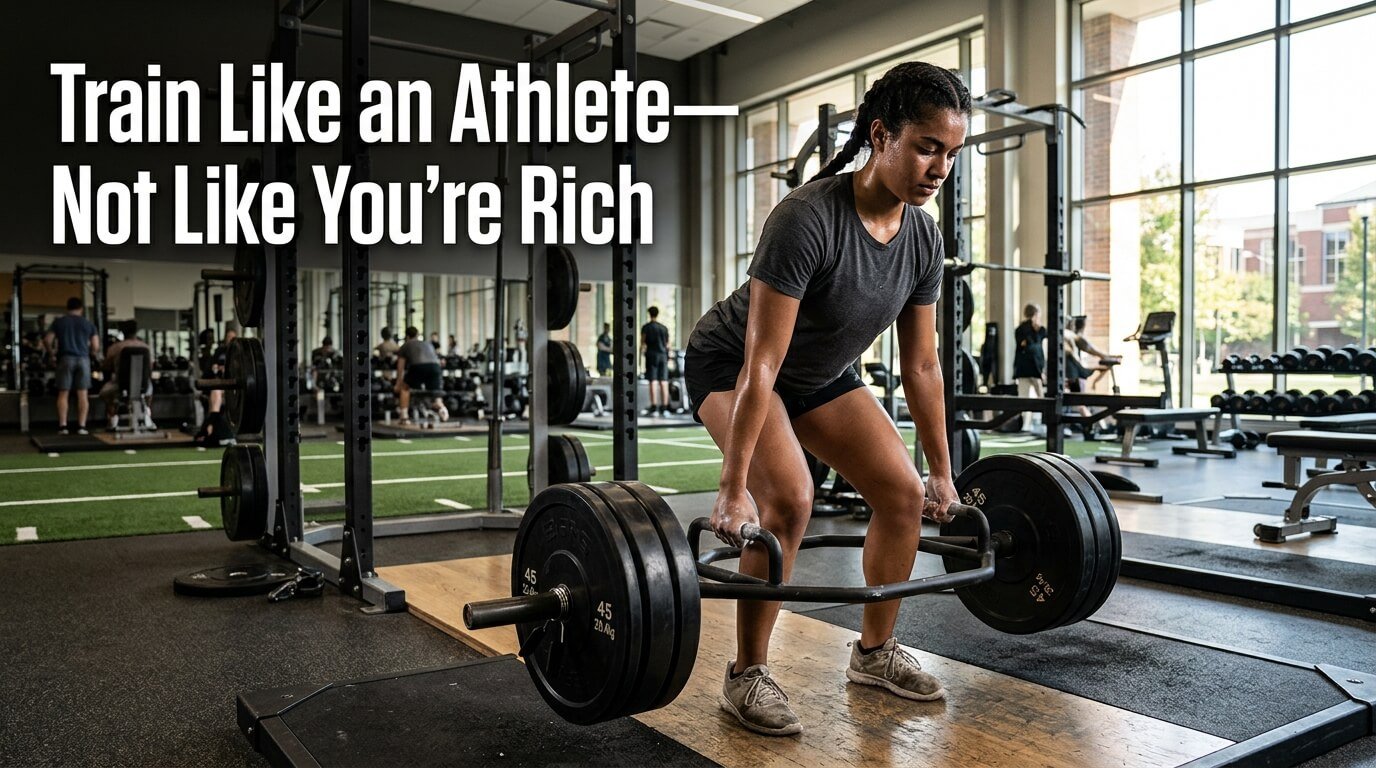
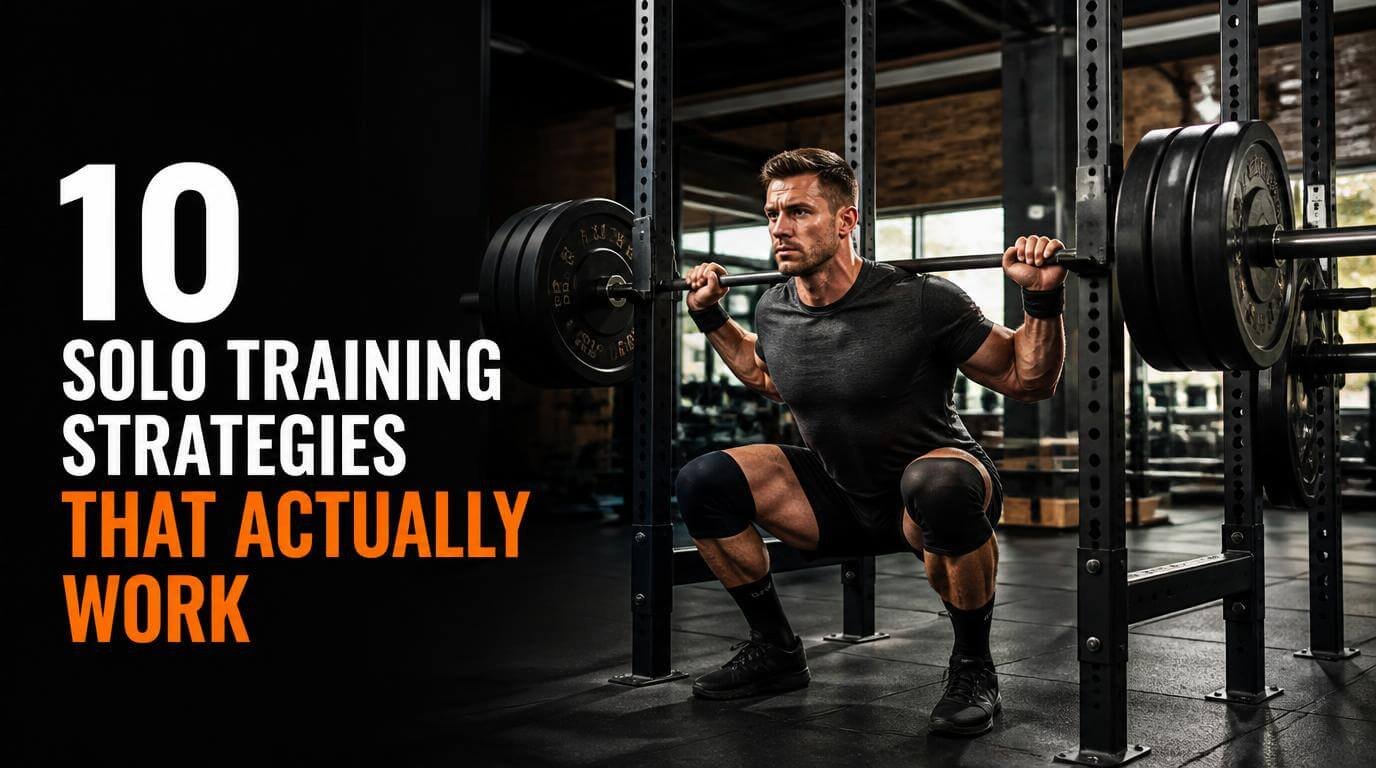
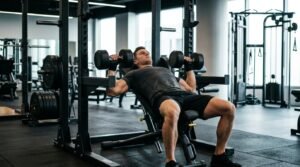
Shift your main lifts to variations that let you bail safely. Swap barbell bench press for dumbbell press or floor press. Use a squat rack with safety pins set at the right height. Landmine presses, Bulgarian split squats, and trap bar deadlifts are all brutally effective and completely solo-friendly. The Smith machine gets a bad reputation, but for certain pressing movements when you train alone, it genuinely fills a gap. Build your program around exercises where failure doesn’t mean danger, and you’ll push harder without hesitation.

2. Use RPE and RIR Instead of Chasing Max Lifts
When nobody is standing behind you ready to grab the bar, hitting a true one-rep max is reckless. I stopped testing maxes alone about four years ago, and my training actually improved because of it.
RPE (Rate of Perceived Exertion) and RIR (Reps in Reserve) give you a way to train with real intensity without gambling your safety. An RPE 8 means you left about two reps in the tank. That’s still hard. That’s still progressive. Apps like Strong or pen-and-paper tracking let you monitor whether your RPE 8 weights are climbing over weeks and months. That upward trend IS your progress. You don’t need a dramatic max-out day to prove you’re getting stronger. Consistent sub-maximal training with honest self-assessment will outperform ego lifting every single time, especially when you’re the only one in the room.
3. Record Your Sets on Video
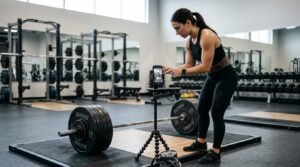
This one changed everything for me. A phone propped against a water bottle became my training partner, my form coach, and my accountability system all at once.
Film your working sets from a side angle. You’ll catch things you can’t feel in the moment: a rounded lower back on deadlifts, knees caving during squats, or a bar path that drifts forward on overhead press. I review clips between sets and make real-time corrections. You can also post form checks on Reddit communities like r/fitness or r/formcheck and get genuinely helpful feedback from experienced lifters. It’s free coaching, basically. Over time, you build a visual log of your progress that’s far more telling than any number in a spreadsheet. Your phone is already in the gym with you. Put it to work.
4. Create Accountability Without a Partner
The biggest risk of training alone isn’t the physical stuff. It’s the days you just don’t show up. Nobody’s texting you asking where you are. Nobody notices if you skip Thursday’s session. That mental gap is where consistency dies.
I’ve used a few systems that genuinely help. First, I log every workout in an app. I’ve bounced between Strong, JEFIT, and even a simple Google Sheet. Seeing a streak of completed sessions creates its own pressure. Second, I joined an online community. The Barbell Medicine forums and various Discord lifting groups have people posting daily training logs. You’re still training alone physically, but you’ve got digital accountability. Third, and this is old school, I set a recurring calendar reminder with a specific workout name. “Tuesday: Heavy Squat Day” hits differently than a vague “go to the gym” notification. Specificity creates commitment.
5. Master the Art of Self-Motivation and Warm-Up Rituals
Performance fitness strategies for people who train alone without partners often overlook the mental game. When there’s no energy in the room besides yours, you have to manufacture it. I’m not talking about toxic positivity or screaming at yourself in the mirror. I mean building a pre-workout ritual that flips a switch in your brain.
Mine looks like this: same playlist on, same warm-up sequence, same first exercise every session. The routine itself becomes the cue. My body recognizes the pattern and starts ramping up before the first working set. Some people use caffeine strategically, a cup of black coffee or a half scoop of a pre-workout like Ghost or Transparent Labs about 30 minutes before training. That’s fine. But the ritual matters more than the supplement. On days when motivation is completely absent, I tell myself I only have to do the warm-up. Nine times out of ten, once the warm-up is done, I finish the whole session. That “just start” trick has saved more workouts than any pre-workout powder ever could.
6. Program Deload Weeks Because Nobody Will Tell You To
Here’s a truth that took me way too long to accept: when you train solo, nobody sees the fatigue accumulating. A training partner might notice your speed slowing down, your face looking more strained, or your mood shifting. Alone, you just grind until something breaks.
Schedule deload weeks every four to six weeks. Drop volume by about 40 to 50 percent but keep the movement patterns the same. I typically cut my working sets from four to two and reduce weight by 10 to 15 percent. It feels wrong at first, like you’re wasting a week. You’re not. Your connective tissue, nervous system, and joints need this. Programs like 5/3/1 by Jim Wendler have deloads built in for exactly this reason. If you run your own programming, add them manually. Put them on the calendar. Treat them as non-negotiable. Future you, the one who’s still healthy and training at 40 or 50, will be grateful.
7. Invest in a Few Key Pieces of Equipment
Training alone often means training at off-peak hours or in a home gym. Either way, a few smart purchases can eliminate the need for a partner entirely.
Resistance bands are at the top of my list. Loop them over a pull-up bar for assisted pull-ups, use them for warm-ups, or attach them to a barbell for accommodating resistance. A set from Rogue or EliteFTS will last years. Safety squat bars remove the shoulder mobility demands of a regular bar and let you bail forward more easily. Fractional plates (half-pound or one-pound increments) allow micro-progressions that keep you moving forward without needing big jumps that might compromise form when you don’t have a spotter. And if you train at home, a decent power rack with adjustable safety arms is the single most important purchase you’ll ever make. It literally replaces a spotter.
8. Track Everything, Because Your Memory Lies
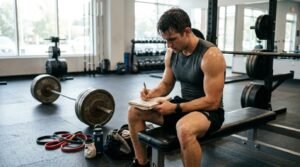
You think you’ll remember what you lifted last Tuesday. You won’t. I’ve forgotten weights, rep counts, and even entire exercises by the time I walked to my car. Without a partner to cross-reference, your training log is your only source of truth.
I use the Strong app on my iPhone because it lets me see my previous performance for every exercise before I start a set. That comparison drives progress. If I hit 185 for 8 reps last week at RPE 8, I know 190 for 8 is a reasonable target today. No guessing. No wasted sets figuring out where I left off. Paper logbooks work just as well if you prefer analog. The method doesn’t matter. The habit does. Track sets, reps, weight, RPE, and any notes about how it felt. Over months, this log becomes an incredibly detailed map of what works for your body specifically.
9. Learn to Differentiate Between Pain and Discomfort
A training partner can often talk you through a tough set or spot when something feels wrong. Alone, you are the sole judge of whether to push through or stop. Getting this wrong in either direction costs you.
Muscle burn and cardiovascular strain are discomfort. That’s training. Sharp joint pain, sudden weakness in a limb, or anything that feels “wrong” in a way you can’t describe, that’s a signal to stop. I keep a simple rule: if it hurts the same way on the second set, I swap the exercise. No ego. No pushing through. I’ve avoided serious injuries this way while people around me have torn labrums and herniated discs trying to be tough. Solo training forces you to develop body awareness that partnered lifters sometimes outsource to their spotter’s judgment. That awareness is a genuine advantage if you respect it.
10. Schedule Periodic Check-Ins With a Coach or Knowledgeable Friend
Training alone doesn’t mean training in complete isolation forever. Every eight to twelve weeks, I book a single session with a coach or send my training log to a knowledgeable friend for review. This costs me maybe $50 to $100 a few times a year, and the return on investment is massive.
A fresh set of eyes catches programming blind spots you can’t see yourself. Maybe you’ve been neglecting posterior chain work. Maybe your volume is too high for your recovery capacity. Online coaching platforms like Stronger By Science or individual coaches on Trainerize make this incredibly accessible. You don’t need a full-time coach. You just need periodic course corrections from someone who isn’t emotionally attached to your program. Think of it like getting your car aligned. You can drive fine without it for a while, but things drift, and the longer you wait, the bigger the correction needed.
Frequently Asked Questions
Is it safe to lift heavy weights when training alone?
Yes, with the right setup. Use a power rack with safety pins for squats and presses. Choose dumbbell variations over barbell movements when true failure is the goal. Avoid exercises where getting stuck under a load is a realistic possibility. Smart exercise selection removes most of the risk that people associate with solo lifting.
What are the best performance fitness strategies for people who train alone without partners on a budget?
Start with bodyweight progressions, resistance bands, and a solid program from a free resource like Stronger By Science or GZCL. Record your sets with your phone for form feedback. Track workouts in a free app like Strong or a Google Sheet. You don’t need expensive equipment to train effectively solo.
How do I stay motivated to train without a workout partner?
Build a pre-session ritual that acts as your mental trigger. Use a consistent playlist, a specific warm-up order, and log your training to create visual streaks. Join an online community where people post daily training updates. External accountability doesn’t require someone physically in the room with you.
Can I build serious muscle training completely alone?
Absolutely. Muscle growth responds to progressive overload, adequate volume, and recovery. None of those require a partner. Many competitive bodybuilders train solo for the majority of their sessions. Consistency and smart programming matter far more than having someone next to you counting your reps.
How often should I get feedback on my form if I train solo?
Film your working sets regularly and review them between sets. Post form check videos to online communities every few weeks for outside input. Book a session with a qualified coach every two to three months for a more thorough evaluation. This combination keeps your technique honest without relying on daily in-person feedback.
Conclusion
Solo training isn’t a compromise. It’s a skill. The longer you do it, the better you get at listening to your own body, programming intelligently, and showing up without needing external pressure. What’s one strategy from this list that you’re going to try this week?