Performance fitness training without access to a gym membership sounds limiting until you actually try it. I canceled my gym membership three years ago, partly to save money, partly because I was tired of waiting for squat racks. What happened next surprised me. I got faster, stronger, and more consistent than I ever was swiping that key fob. The gym isn’t the gatekeeper to athletic performance. You are.
Define What “Performance” Actually Means for You
Before you do a single rep, get specific about what you’re training for. Performance isn’t a vague word. It means something different for a weekend soccer player than it does for someone training for a Spartan Race or just trying to keep up with their kids without getting winded.
Sit down and write out three concrete goals. Not “get in shape.” Something like “run a 7-minute mile,” “do 10 strict pull-ups,” or “improve my vertical jump by 4 inches.” When I first ditched the gym, my goals were simple: sprint faster, move better, stop getting injured playing pickup basketball. That clarity shaped every workout I built from scratch.
Without clear targets, you’ll just do random burpees in your living room and wonder why nothing changes. Specificity drives programming, and programming drives results, whether you have a $200-a-month gym or a patch of grass and a pull-up bar.
Build Your Minimal Equipment Setup
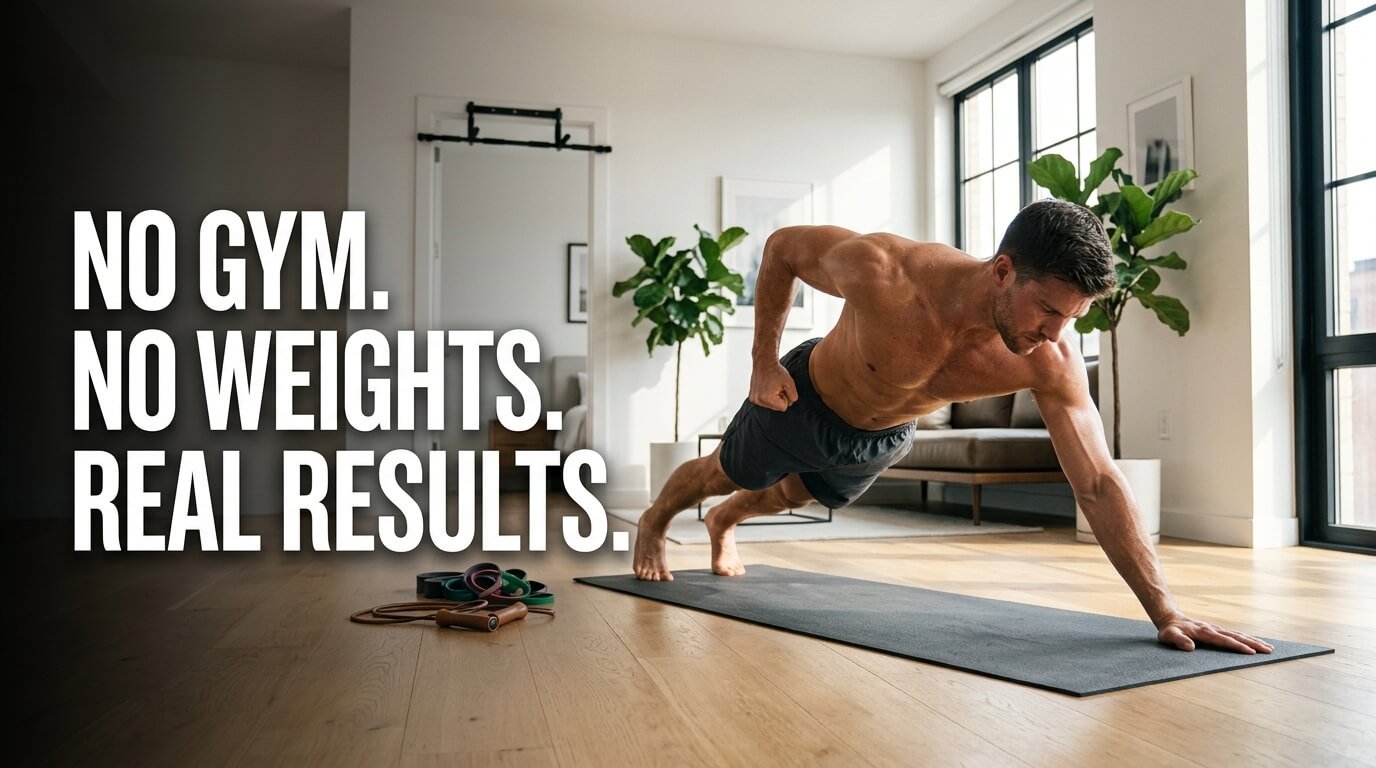
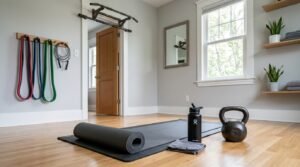
You don’t need much, but you do need a few things. A completely equipment-free approach works for beginners, but if you’re chasing real performance gains, a small investment goes a long way.
Here’s what I bought over time, spending under $300 total:
- A doorframe pull-up bar (Iron Gym, about $25)
- Two kettlebells, a 35-pound and a 53-pound (Rogue or Cap Barbell)
- A jump rope (Crossrope makes excellent weighted options)
- Resistance bands in multiple tensions (I like WODFitters)
That’s it. Everything fits in a closet. The kettlebells alone can handle strength, power, and conditioning work. The pull-up bar gives you vertical pulling, which is the one movement pattern that’s genuinely hard to replicate without equipment. And a good jump rope builds footwork, coordination, and cardio faster than most people realize.
You can start with even less. Honestly, a pull-up bar and a single kettlebell will cover you for months.
Program Your Training Like an Athlete
Random workouts produce random results. If you want actual performance fitness training without access to a gym membership, you need a real program structure. Here’s how I set up my weekly training.
The Weekly Split That Works
I train five days a week using this framework:
- Day 1: Lower body strength + plyometrics
- Day 2: Upper body strength + core
- Day 3: Sprint and agility work
- Day 4: Full-body power (kettlebell complexes)
- Day 5: Conditioning and mobility
Two rest days rotate based on how I feel. Some weeks I take Wednesday and Sunday off. Other weeks I move things around. The key is that every session has a purpose. I never just “work out.” I train a specific quality.
Progressive Overload Without a Barbell
The biggest objection to gym-free training is always the same: “How do you progressively overload?” Fair question. Here’s what actually works.
For lower body, I use single-leg progressions. A bodyweight squat becomes a Bulgarian split squat, which becomes a pistol squat, which becomes a weighted pistol squat holding a kettlebell. That’s months of progression right there. For upper body, push-up variations alone can keep you busy for a year. Archer push-ups, deficit push-ups, pseudo planche push-ups. Each one is harder than the last.
I also manipulate tempo. A slow 4-second eccentric on a push-up makes your bodyweight feel twice as heavy. Add a 2-second pause at the bottom and your chest will be screaming.
Reps, sets, tempo, rest periods, range of motion, load placement. You have six variables to play with before you ever need a heavier weight.
Master the Movements That Transfer to Sport
Not all exercises are created equal when performance is the goal. You want movements that build strength in patterns you’ll actually use.
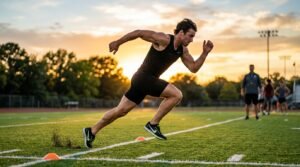
Sprinting is non-negotiable. Nothing builds hip power, hamstring resilience, and overall athleticism like actual sprint work. I sprint twice a week, usually hill sprints on Tuesdays and flat 40-yard repeats on Thursdays. A grass field or a hill is free. Always free.
Jumping matters too. Box jumps (use a park bench or sturdy wall), broad jumps, and depth jumps train your nervous system to produce force quickly. That’s the difference between being strong and being athletic. Plenty of strong people move slowly. Plyometrics fix that.
Single-leg work deserves extra attention because sports happen on one leg. You cut, plant, decelerate, and push off from one foot constantly. Lunges, step-ups, single-leg Romanian deadlifts with a kettlebell. These build stability that no leg press can replicate.
Use Conditioning Methods That Actually Build Fitness
Jogging three miles won’t make you a better athlete. It’ll make you better at jogging three miles. For performance, your conditioning needs to match the energy demands of your sport or goal.
I rotate between three conditioning styles:
Interval sprints are my go-to. Ten rounds of 100-meter sprints with 60 seconds rest between each. This builds the kind of repeat-effort capacity you need for team sports, obstacle races, or just real-life situations where you need to go hard, recover, and go hard again.
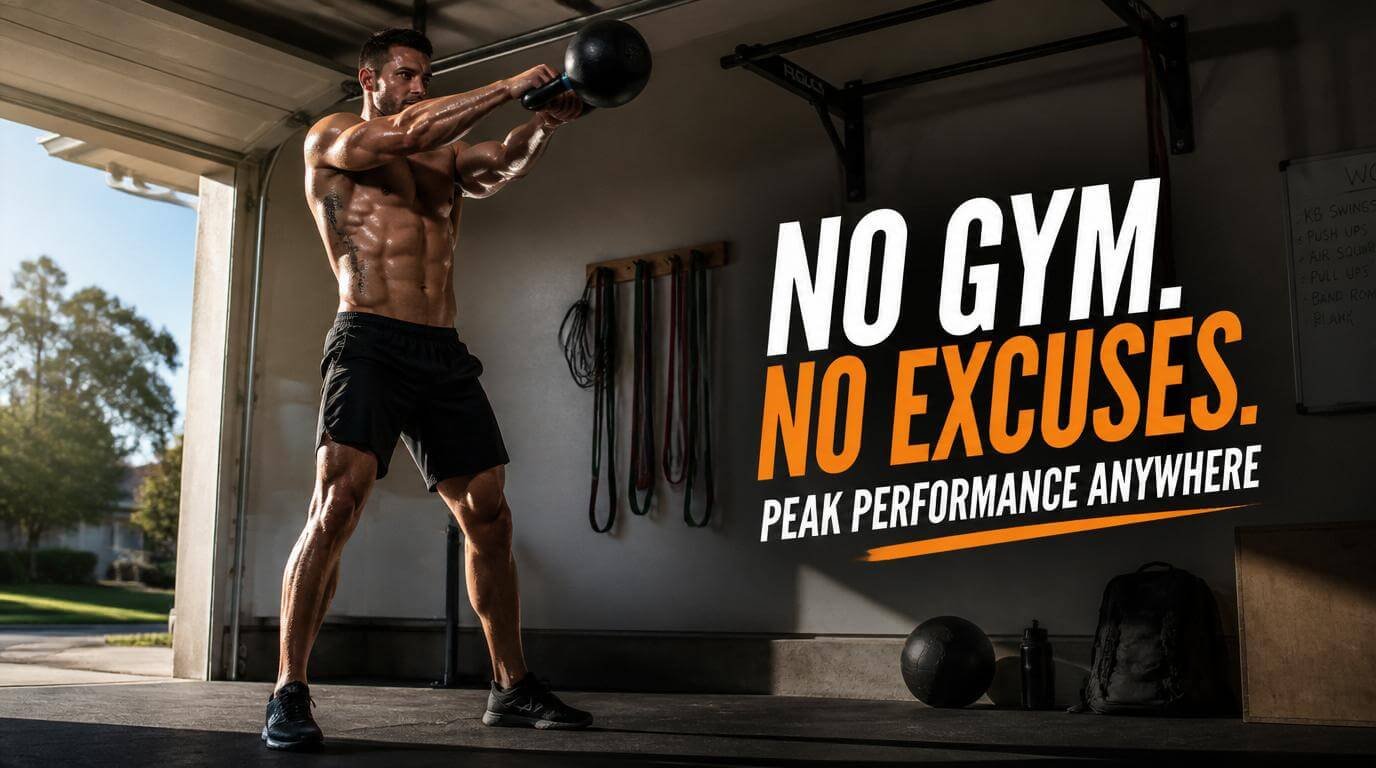
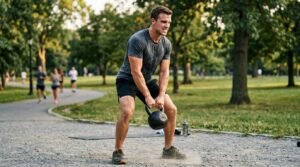
Kettlebell complexes are brutally effective. A sequence like 5 cleans, 5 presses, 5 front squats, and 10 swings done without putting the bell down, repeated for 5 rounds. My heart rate hits 170+ every time, and I’m building strength simultaneously.
Jump rope intervals round things out. Thirty seconds fast, thirty seconds slow, for 10 to 15 minutes. Crossrope’s heavy ropes add a shoulder and grip element that surprised me the first time I tried them.
I rarely do steady-state cardio anymore. Intervals just work better for the kind of fitness I care about.
Don’t Ignore Mobility and Recovery
Performance isn’t just about what you can produce. It’s about what you can sustain. I learned this the hard way when a tight hip flexor turned into a pulled groin that sidelined me for six weeks.
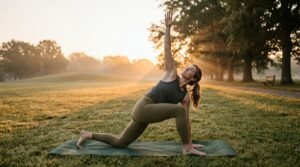
Now I spend 10 to 15 minutes daily on mobility work. Not just stretching, but active mobility drills. 90/90 hip switches, deep squat holds, thoracic spine rotations, and ankle circles before every session. I follow a lot of what Functional Range Conditioning teaches, and it’s made a noticeable difference in how I move during sprints and lateral cuts.
Sleep and nutrition matter more than any supplement ever will. I aim for 7 to 8 hours of sleep and eat enough protein, roughly 0.8 grams per pound of bodyweight. Nothing fancy. Chicken, eggs, Greek yogurt, rice, vegetables. Recovery is where the actual adaptation happens. Training is just the stimulus.
Track Everything and Adjust Monthly
A training log changed my results more than any single exercise. I use a simple notebook, nothing digital, and write down what I did, how it felt, and what I’ll change next time.
Every four weeks, I review my log and adjust. Am I hitting my sprint times? Are my reps on pull-ups going up? If something plateaus, I change a variable. Maybe I add a set, slow down the tempo, or swap an exercise entirely.
This is how performance fitness training without access to a gym membership stays effective long-term. You treat it like a real program, not a casual hobby. Athletes periodize their training. You should too, even if your “gym” is your backyard.
FAQs
Can you really build serious strength without a gym?
Absolutely. Gymnastics athletes build incredible strength with bodyweight alone. Adding kettlebells and progressing through harder single-limb variations creates more than enough resistance. I’ve built a strict muscle-up and a heavy pistol squat without ever touching a barbell in three years. Strength is about tension and progressive challenge, not location.
What’s the biggest mistake people make with home training?
Doing random workouts from YouTube with no structure. You need a program with progressive overload, planned rest days, and clear goals. Without those three things, you’ll stay exactly where you are. Write a plan, follow it for at least 8 weeks, measure your results, then adjust.
How do you stay motivated without a gym environment?
I train outdoors as much as possible. A park, a hill, even a parking lot on a Sunday morning. The change of scenery keeps things fresh. I also track my numbers religiously, and watching those numbers climb is more motivating than any gym playlist ever was for me.
Is performance fitness training without access to a gym membership good for team sport athletes?
It’s ideal, honestly. Most team sports demand sprinting, jumping, lateral agility, and single-leg stability. You can train all of those outside a gym. Sprints, plyometrics, kettlebell work, and agility ladder drills cover the main athletic qualities. Many college and pro athletes do significant portions of their training outside a weight room anyway.
How much money do you actually need to get started?
You can start with zero dollars if you focus on bodyweight progressions, sprinting, and plyometrics. When you’re ready, a pull-up bar costs around $25 and a used kettlebell runs $30 to $60 on Facebook Marketplace. Under $100 gets most people everything they need for the first six months.
Do you ever miss the gym?
Sometimes I miss the social aspect and the heavy barbell work. But I don’t miss the commute, the crowds, or the monthly fees. My results speak for themselves, and I can train anywhere in the world with what fits in a duffel bag. That freedom is worth more to me than any cable machine.
Conclusion
Three years without a gym, and I’m in the best shape of my life. The tools are simpler, the training is more focused, and the results are real. If you’ve been putting off getting serious because you don’t have a membership, that excuse just ran out of room. What’s the first thing you’re going to train this week?