I figured out how to improve performance fitness without expensive gym equipment about three years ago, right after my gym membership hit $89 a month and I finally snapped. I was tired of waiting for squat racks, dodging influencers filming content, and paying a small car payment just to sweat. So I canceled everything and started training in my garage with almost nothing. What happened next honestly surprised me. I got faster, stronger, and more athletic than I’d been in years.
Why Expensive Equipment Isn’t the Performance Advantage You Think It Is
Most commercial gyms are designed around aesthetics, not athleticism. Rows of machines isolate individual muscles, which looks impressive on a spec sheet but does almost nothing for real-world performance. Athletic power comes from compound movements, coordination, and training your body to work as a single unit.
Think about it. Sprinters, boxers, gymnasts, and military operators all build insane performance using surprisingly simple tools. Bodyweight work, resistance bands, plyometrics, and basic free weights carry these athletes through careers. The fancy cable machines and $6,000 functional trainers? They’re nice to have, but they’re not the reason anyone gets fast or explosive.
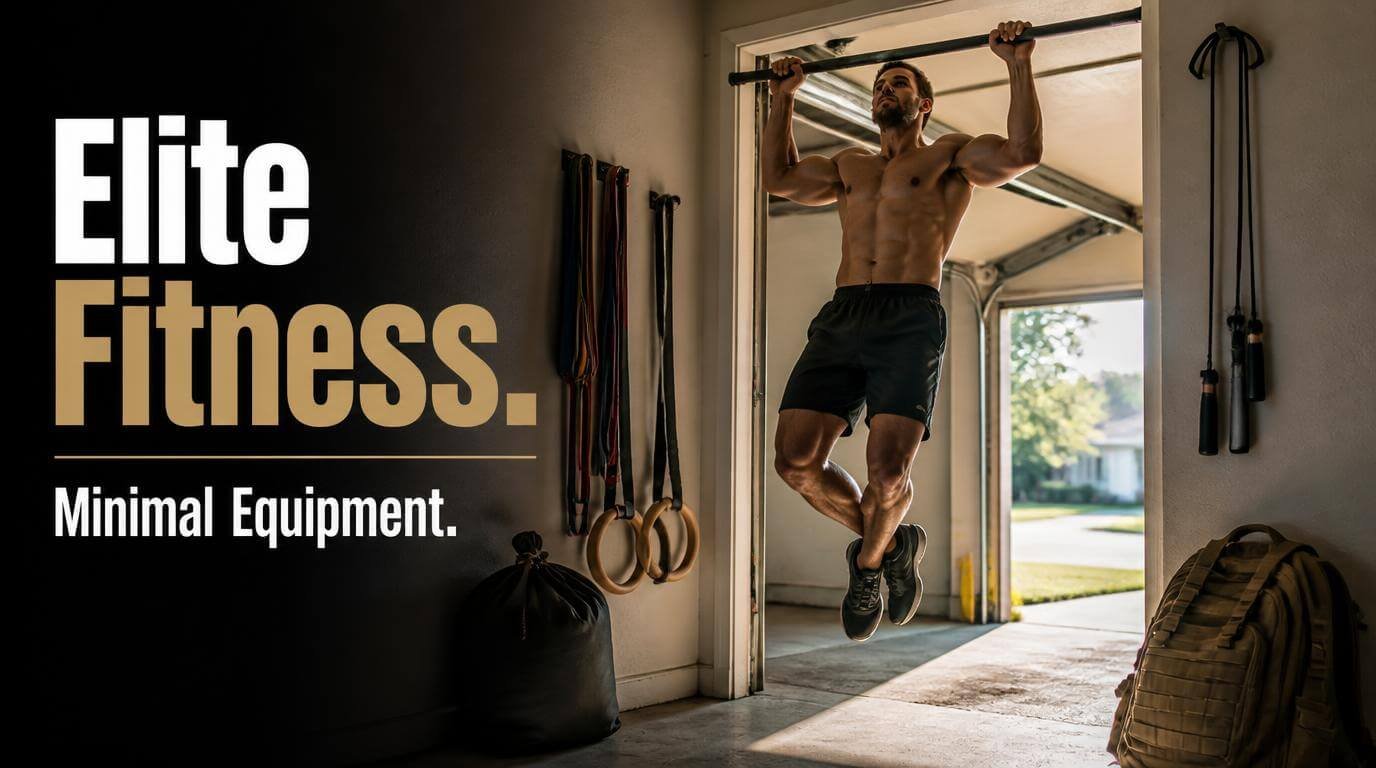
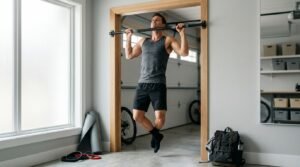
I spent my first month equipment-free using nothing but a pull-up bar I mounted in a doorframe and a flat patch of concrete in my driveway. My vertical jump improved by two inches in six weeks. My resting heart rate dropped. I felt more athletic at 34 than I had at 24, and I hadn’t spent a dime beyond that $25 pull-up bar from Amazon.
Build an Explosive Foundation With Plyometrics
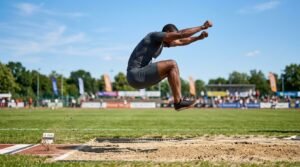
Plyometric training is where I saw the fastest performance gains, and it requires literally zero equipment. Box jumps without a box? Just use a park bench or a sturdy porch step. Broad jumps need nothing but ground. Tuck jumps, skater hops, depth drops, and bounding drills all train your fast-twitch muscle fibers to fire harder and faster.
I started with three plyometric sessions per week, keeping them short. Fifteen to twenty minutes max. The key is quality over volume. Each rep should be max effort with full recovery between sets. If you’re grinding out sloppy reps because you’re gassed, you’re training endurance, not explosiveness. Rest 60 to 90 seconds between sets and actually focus on pushing the ground away from you as hard as possible.
One combo I still use every week: 5 broad jumps, 10 squat jumps, 8 lateral bounds per side, and 5 depth drops from a step. Three rounds. Takes twelve minutes and absolutely fries my legs in the best way.
Master Bodyweight Strength Training
Bodyweight training has a reputation problem. People assume push-ups and air squats are “beginner stuff” that you graduate from once you’re strong enough for barbells. That’s nonsense. If you can knock out 15 perfect pistol squats per leg, 10 strict muscle-ups, and hold a 60-second L-sit, you’re stronger and more coordinated than 95% of gym-goers.
The trick is progressive overload without adding weight. You do this by manipulating leverage, tempo, and range of motion. A regular push-up too easy? Elevate your feet. Still easy? Go to archer push-ups. Then one-arm negatives. Then full one-arm push-ups. The progression ladder for bodyweight movements is genuinely long, and most people never come close to the top.
I followed a program loosely based on the progressions in “Overcoming Gravity” by Steven Low, and it gave me a structured path that felt just as serious as any barbell program. Pull-ups became weighted pull-ups using a backpack stuffed with books. Squats became shrimp squats and pistols. Dips became ring dips on a $35 set of gymnastic rings I hung from a tree branch.
Your body is the most versatile piece of equipment you’ll ever own. Stop underestimating it.
Use Resistance Bands for Real Athletic Gains
I was skeptical about resistance bands until I actually trained with a quality set. Not the flimsy little loops from a physical therapy office, but thick power bands from brands like WOD Nation or Rogue. A full set costs around $30 to $50 and can replicate a shocking number of barbell movements.
Banded squats, banded deadlifts, overhead presses, face pulls, rows, and even explosive movements like banded broad jumps all work. The variable resistance, where the band gets harder as you stretch it further, actually trains your lockout strength and acceleration better than free weights in some cases.
I also use bands for sprint resistance training. I loop a heavy band around my waist, anchor it to a pole, and sprint against the resistance for 10 to 15 yards. It builds ridiculous hip drive and acceleration power. Track athletes have used this method for decades, and it costs next to nothing compared to a sled and turf setup.
Bands also travel anywhere. I’ve trained in hotel rooms, backyards, and parking lots. Try bringing your squat rack to a campground.
Sprint Training Is the Most Underrated Performance Tool
If you want to improve performance fitness without expensive gym equipment, sprinting should be non-negotiable. It builds leg power, cardiovascular capacity, core strength, and mental toughness simultaneously. And all you need is a flat stretch of ground.
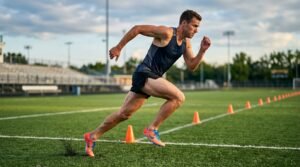
I sprint twice a week on a local soccer field. My sessions are simple. After a thorough warm-up of leg swings, high knees, butt kicks, and a few easy jog-throughs, I run 6 to 8 sprints at 85 to 95% effort over 40 to 60 yards. Full recovery between each one, usually a slow walk back to the start line.
That’s it. Twenty-five minutes including warm-up. But those two sessions per week built more usable athleticism than any amount of treadmill jogging ever did for me. My body composition changed visibly within a month. My legs got more powerful. Even my posture improved because sprinting forces you to engage your glutes and core in ways that sitting at a desk all day destroys.
One warning though: ease into sprinting if you haven’t done it recently. Hamstring strains are brutally common when people go from zero to full send. Spend two weeks doing tempo runs at 70% effort before you open it up.
Loaded Carries With Household Items
Dan John, one of the smartest strength coaches alive, once said that loaded carries do more for total body performance than almost any other exercise. He’s right. And you don’t need a trap bar and specialty farmers walk handles to do them.
Fill two 5-gallon buckets with water, sand, or gravel. Grab a heavy backpack. Pick up a sandbag. Carry a keg. Use whatever heavy, awkward thing you can find and walk with it. Farmer’s carries, overhead carries, bear hug carries, and suitcase carries all train grip strength, core stability, shoulder health, and conditioning at the same time.
I made my own sandbag for about $15. A military surplus duffel bag from an army surplus store, filled with pea gravel inside contractor trash bags. It weighs roughly 80 pounds, and it’s one of the most versatile pieces of “equipment” I own. I squat it, press it, carry it, throw it, and drag it. Nothing builds functional, real-world strength like wrestling with an unstable load that doesn’t have convenient handles.
Build a Simple Training Schedule That Actually Works
Having all these tools and methods is useless without a structure. Here’s what my weekly schedule looked like when I first ditched the gym, and it’s close to what I still follow now.
Weekly Layout
- Monday: Upper body bodyweight strength (push-ups progressions, pull-ups, dips, rows) plus 10 minutes of band work
- Tuesday: Sprint session followed by loaded carries
- Wednesday: Active recovery, a 30-minute walk or easy bike ride
- Thursday: Lower body bodyweight strength (pistol squats, Nordic curls, calf raises) plus plyometrics
- Friday: Full body conditioning circuit, mix of burpees, band work, jumping, and carries
- Saturday: Long hike, recreational sport, or bike ride
- Sunday: Full rest
The whole thing takes 30 to 45 minutes per session. No commute. No waiting for equipment. No monthly fees. I train barefoot in my garage half the time, and I’ve hit personal bests on vertical jump, broad jump, pull-up reps, and sprint times all within this framework.
Consistency beats complexity every single time. Pick movements you’ll actually do, put them on a schedule, and show up.
Track Your Progress Without Fancy Apps
You don’t need a $300 GPS watch or a premium Whoop strap to measure improvement. A notebook works. Seriously. I use a cheap composition book from Dollar Tree, and I write down every workout: movements, sets, reps, and how I felt. Once a month, I test a few benchmarks.
My benchmarks are simple: max pull-ups in one set, standing broad jump distance, 40-yard sprint time on my phone’s stopwatch, and a one-mile run time. These four tests cover upper body strength, lower body power, speed, and aerobic capacity. If those numbers trend upward over months, the program is working.
I also film my sprints and jumps occasionally on my phone. Watching yourself move in slow motion reveals form issues no mirror ever will. I caught a hip drop during my sprint stride that was costing me speed, and fixing it shaved real time off my 40.
FAQs
Can bodyweight training alone build real athletic performance?
Absolutely. Gymnasts are living proof. Progressive bodyweight training builds strength, coordination, and body control that machines can’t replicate. The key is advancing to harder variations over time instead of just adding reps. Pistol squats, handstand push-ups, and muscle-ups challenge even very strong athletes. Pair bodyweight work with sprints and plyometrics, and you have a complete performance system.
How often should I train if I’m not using a gym?
Four to five sessions per week works well for most people, with at least one full rest day and one active recovery day. Because you’re not loading a heavy barbell on your spine, your recovery demands are usually lower, which means you can train a bit more frequently. Listen to your body and back off if joints start complaining.
What’s the single best budget purchase for home performance training?
Gymnastic rings. For around $35, you get an incredibly versatile upper body training tool that also demands serious core engagement. Rows, dips, push-ups, pull-ups, and muscle-ups all become harder and more effective on rings. Hang them from a tree, a beam, or a pull-up bar. They pack flat and travel easily too.
How long before I see results training without equipment?
Most people notice a real difference in 4 to 6 weeks if they train consistently and progressively. Your body adapts to movement patterns quickly, so you should feel more explosive and coordinated within the first few weeks. Visible changes in muscle tone and body composition usually follow by week 6 to 8, especially if you’re also sprinting regularly.
Is it possible to improve performance fitness without expensive gym equipment long term?
Yes, and I’m living proof after three years of it. The ceiling is higher than most people assume. Between bodyweight progressions, bands, sprints, plyometrics, and homemade implements like sandbags, you can keep challenging yourself for years. Some of the fittest people I’ve met train entirely outside of commercial gyms.
Conclusion
Canceling my gym membership felt risky at the time, but it turned out to be the best training decision I’ve ever made. Simpler tools, shorter sessions, and more intentional movement added up to better results than any $200-a-month facility ever gave me. What’s the first thing you’d try from this list?